HEALTH & MOBILITY
The 2-Minute Move: Four Gentle Ways to Start
A short, flexible movement break for days when a full workout feels like too much.
5 minute read
Choose one movement or combine all four. A seated option is always a real option.
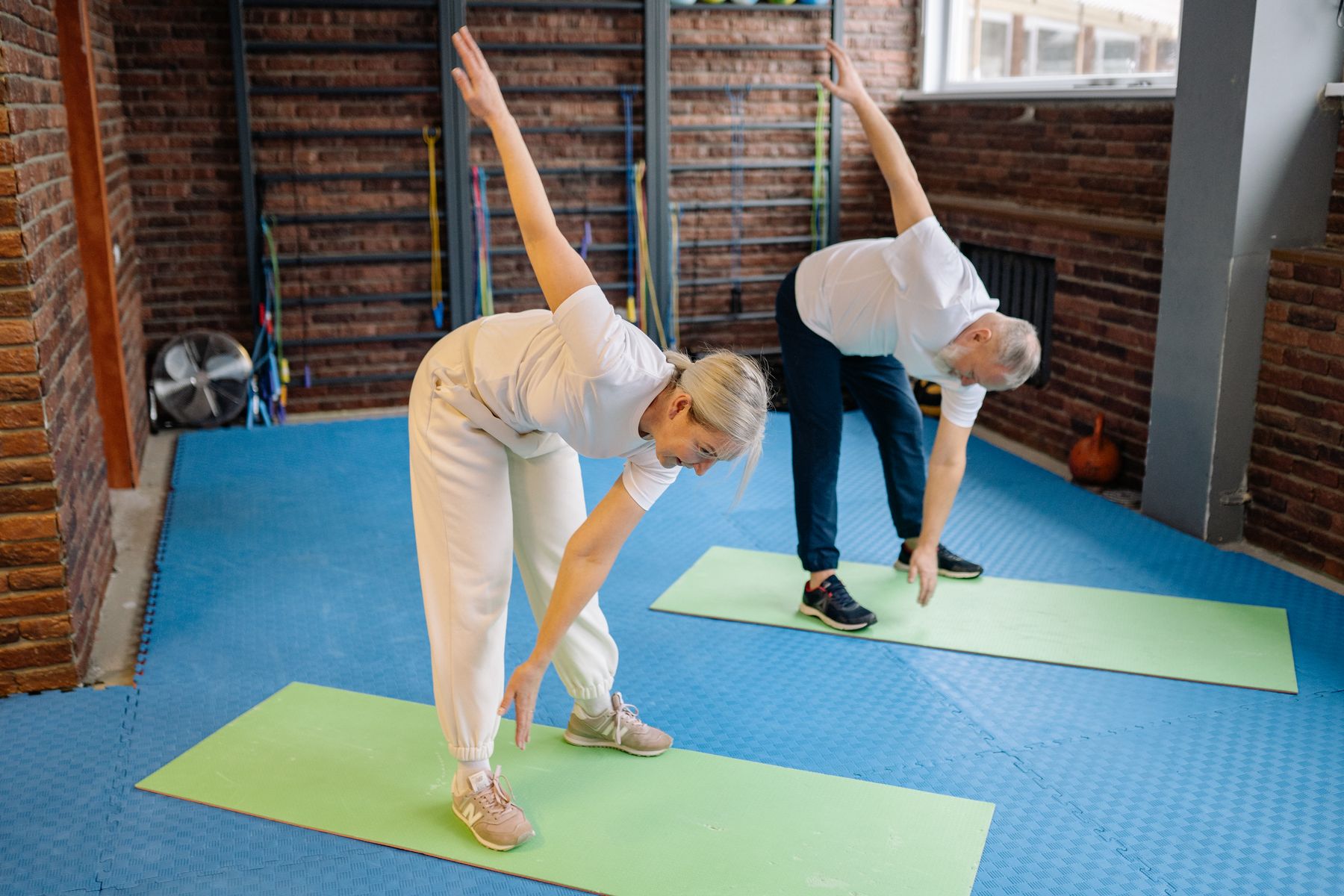
Why two minutes can be a useful beginning
Two minutes is not a replacement for the broader activity recommended for health. It is a small doorway into moving more—especially on a low-energy day or after a long period of sitting.
The World Health Organization says some activity is better than none, and the NHS advises breaking up long periods of sitting. Start comfortably and build gradually. If two minutes is what fits today, it still counts.
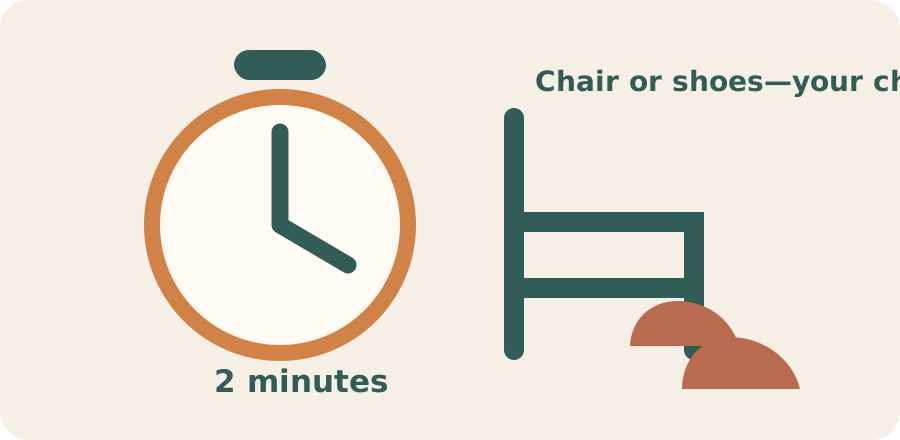
1. Seated march
Sit upright in a solid, stable chair that does not have wheels. Keep both feet flat to begin. Lift one knee only as far as is comfortable, lower the foot with control, then change sides.
Move slowly for about 30 seconds. Hold the sides of the chair if that helps you feel steady. The NHS includes a similar hip-marching movement in its gentle sitting routine.
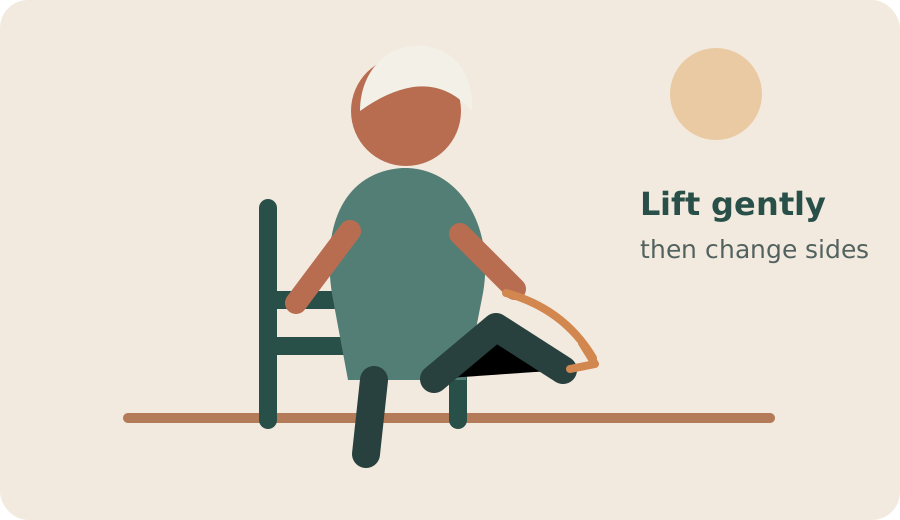
2. Shoulder rolls
Sit or stand tall with your arms relaxed. Slowly lift your shoulders, draw them back, then let them settle down. Make several easy circles, then pause.
The motion should feel gentle—not forced. If a shoulder is painful, skip this movement and choose another option.
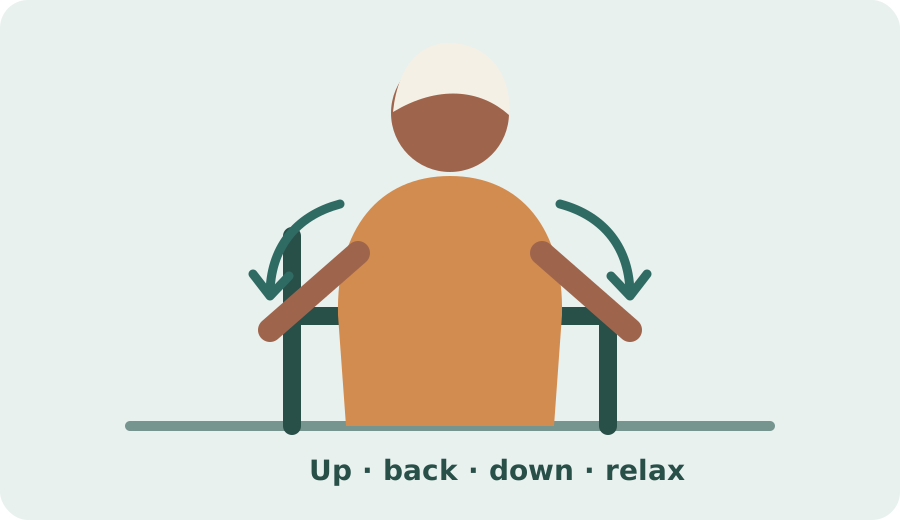
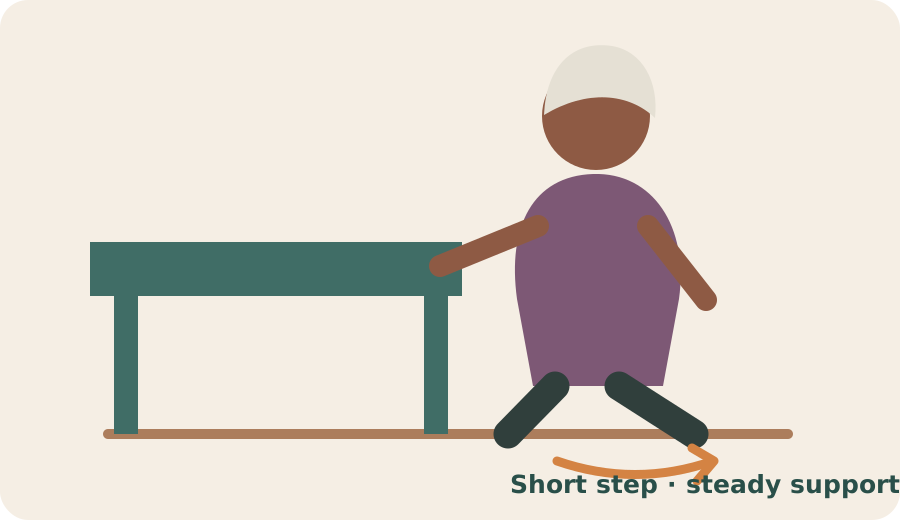
3. Supported side steps
Stand behind a sturdy counter or heavy chair and rest your hands lightly for support. Step a short distance to one side, bring the other foot toward it, then return the other way.
Use a clear, non-slip space. If standing balance is uncertain, remain seated and tap one foot out to the side instead.
4. Ankle points and flexes
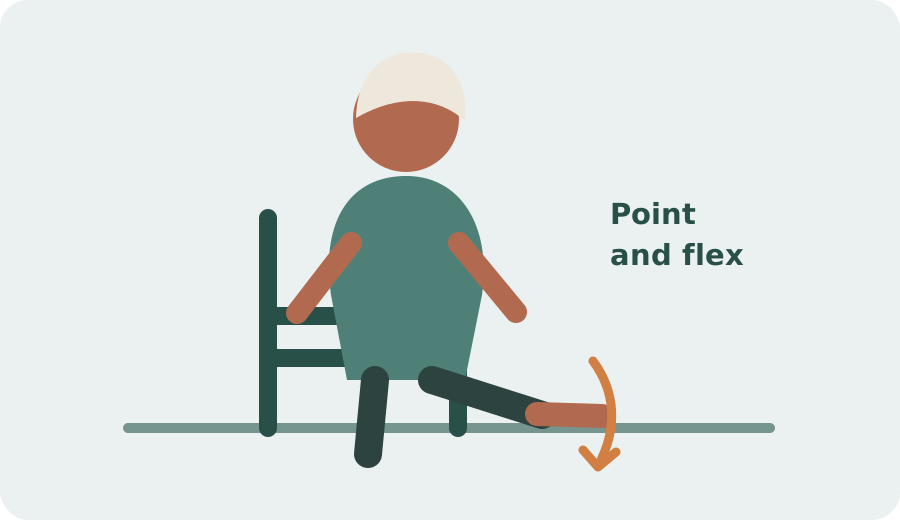
Sit upright and hold the chair if needed. Extend one foot slightly forward. Point the toes away, then bring them back toward you. Change feet after several comfortable repetitions.
Keep the ankle movement smooth and easy. You can also leave the heel on the floor and lift and lower the toes.
Make it easier to return tomorrow
Attach the two-minute move to something that already happens: after your morning drink, before lunch, during a television break or after a phone call. The existing routine becomes the reminder.
Some days you may continue longer. Other days you may stop after two minutes. Both are valid. The useful habit is returning, not proving anything.
When to pause and get advice
Stop if you develop chest pain, dizziness, faintness, unusual shortness of breath or new pain. Seek urgent medical help for severe or persistent symptoms.
If you have not exercised for some time, have a health condition, recently had surgery, have fallen, or are unsure which movements are suitable, ask a qualified health professional before starting.
Sources
World Health Organization — Physical activity and sedentary behaviour: a brief for older people
What should we explore next?
Your experience can help make Life After 60 more useful.
Take the short survey