HEALTH & MOBILITY
Five Gentle Balance Moves—with Support When You Need It
A calm, illustrated routine you can practise beside a sturdy chair or counter, with an easier option for every move.
7 minute read
Keep a solid support within reach. Start with one or two moves and build slowly.
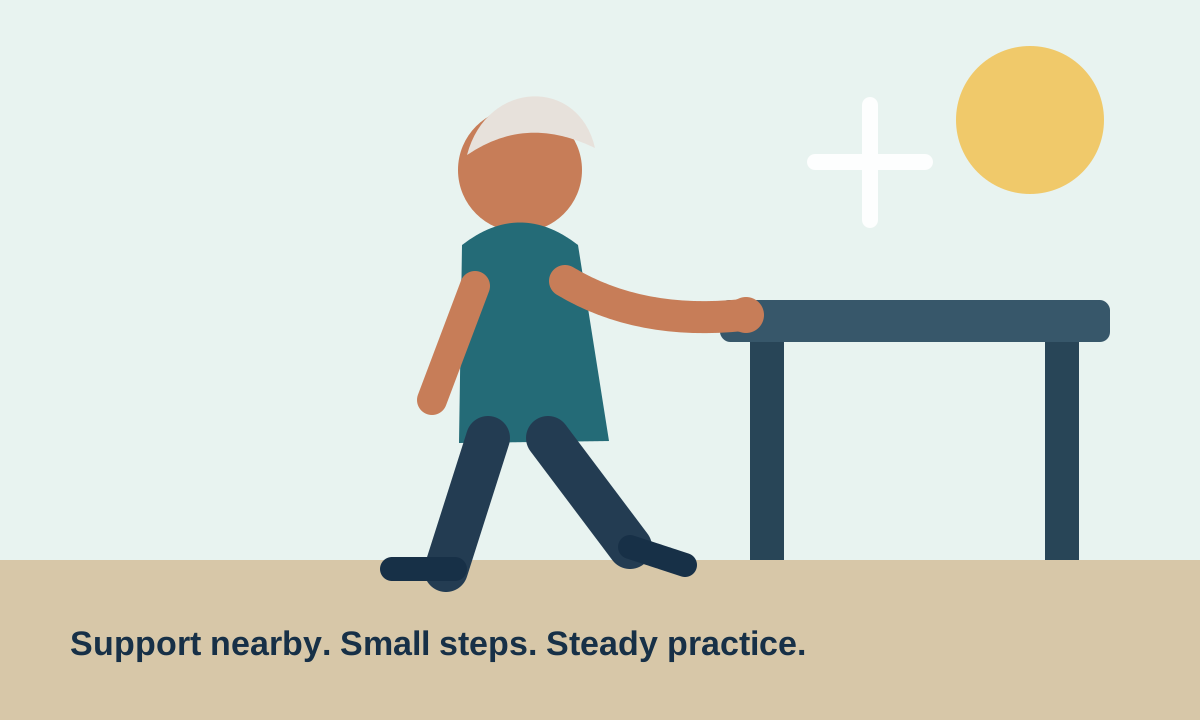
Set up for steadiness first
Choose a clear, non-slip space beside a solid counter or a heavy chair that cannot roll or tip. Wear secure, comfortable footwear, or go barefoot only if the floor gives you good grip.
Stand tall without forcing your posture. Rest one or both hands on the support. Using support is part of the exercise—not a lesser version of it. Move slowly enough that you can place each foot deliberately.
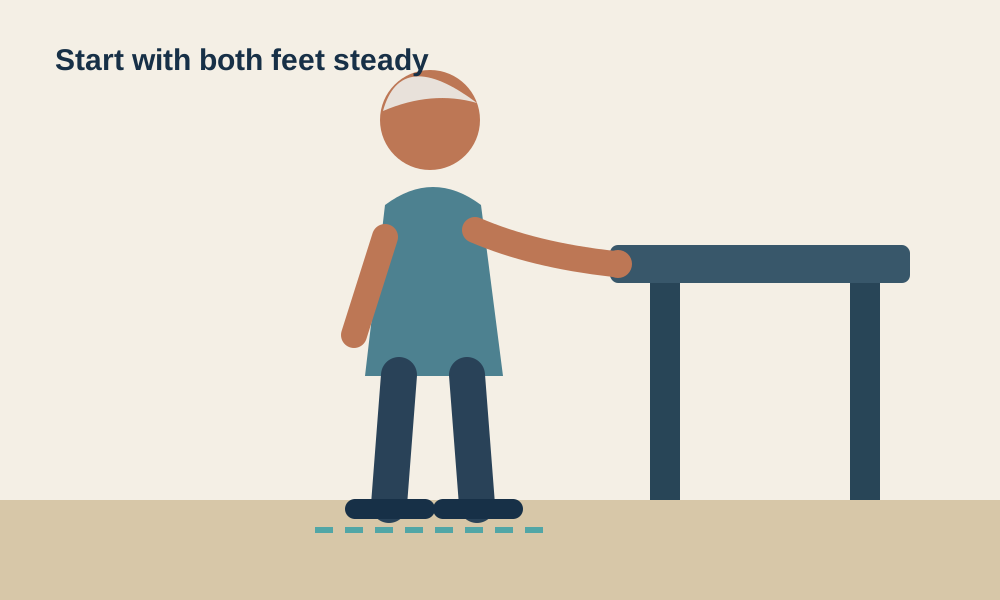
1. Side-to-side weight shift
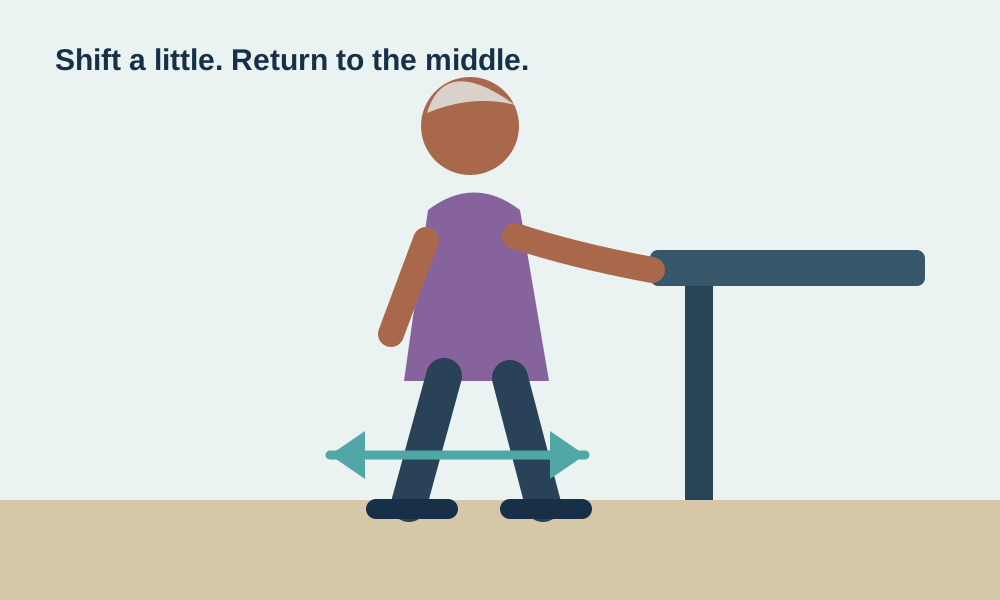
Stand with your feet about hip-width apart and hold the support. Slowly move a little more of your weight onto your right foot, then return to the middle. Shift gently toward the left and return.
Keep both feet on the floor. Try five slow shifts each way. Make it easier by keeping both hands on the counter and making the movement very small.
2. Heel-to-toe position
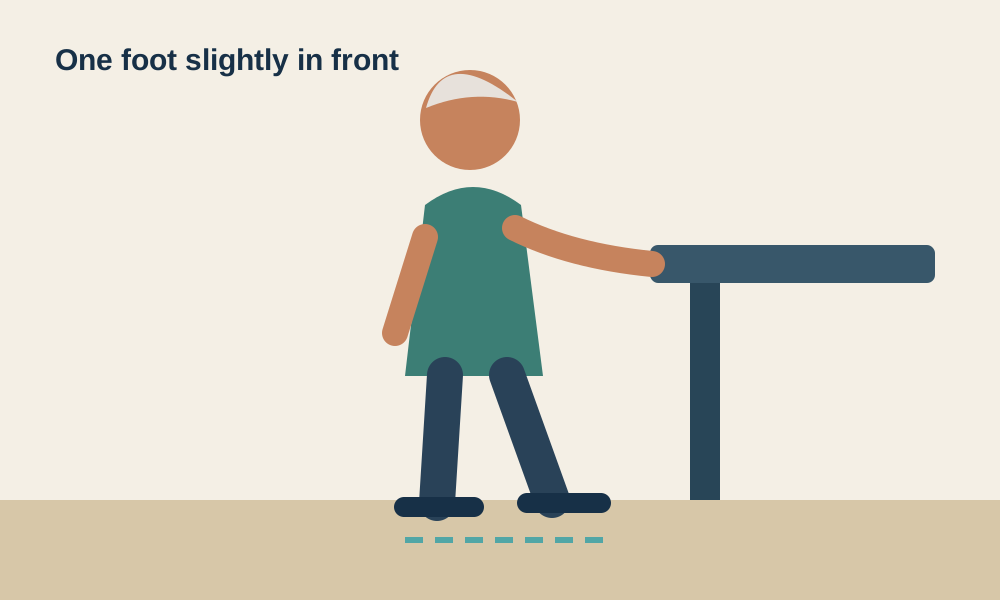
Hold the support and place one foot slightly in front of the other, as though you are standing on a narrow path. If that feels comfortable, bring the front heel closer to the back toes.
Look forward and hold for up to 10 seconds, then change which foot is in front. Repeat up to three times on each side. For an easier version, keep the feet farther apart.
3. Supported side steps
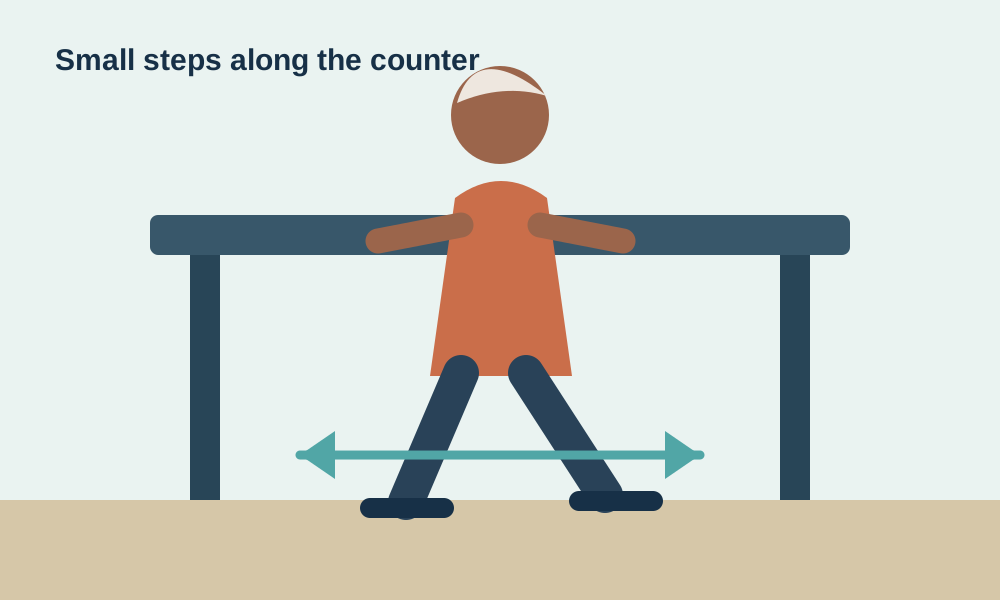
Face the counter and hold it with both hands. Step a short distance to the right, then bring the left foot toward it without rushing. Take several small steps, then return the other way.
Keep your hips facing the counter and clear the floor before you begin. The NHS recommends slow, controlled sideways walking; start with fewer steps than its full routine if that suits you better.
4. Small one-leg lift
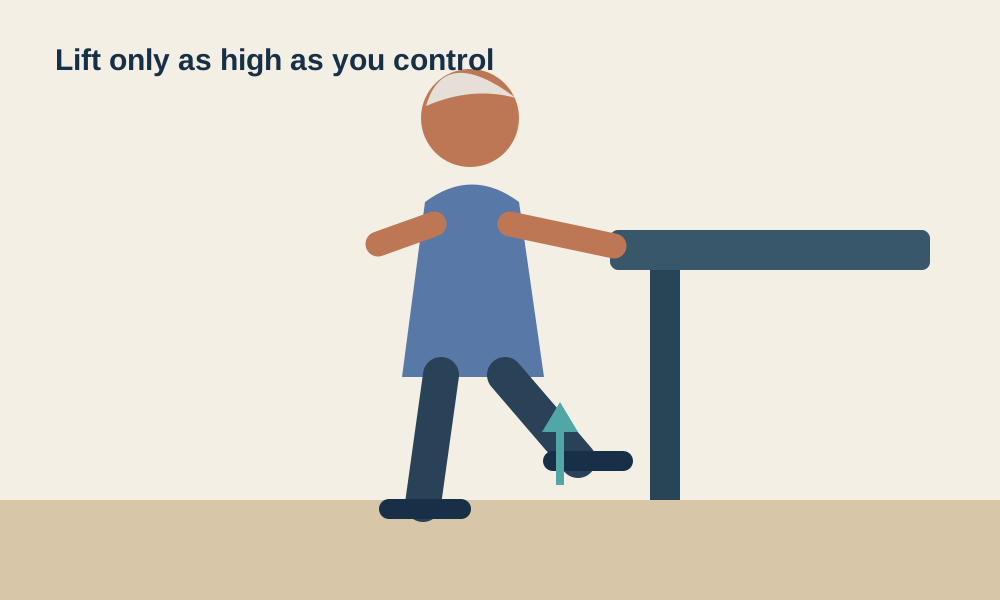
Stand beside the support and keep a slight bend in the leg you are standing on. Lift the other foot only an inch or two from the floor. Hold briefly, set it down gently, then change sides.
Try three lifts on each side. Keep both hands on the support if needed. An easier option is to leave the toes touching the floor and lift only the heel.
5. Sit to stand—with hands if you need them
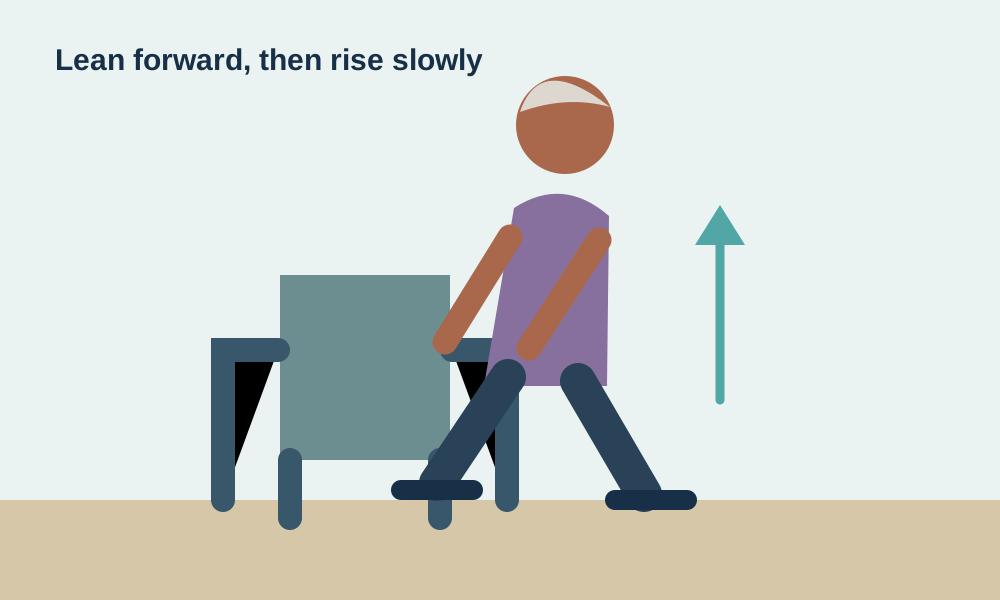
Sit near the front of a stable chair with your feet flat and slightly behind your knees. Lean forward a little, press through your feet and stand. Pause, then reach back for the chair and sit down slowly.
Use the chair arms or a nearby counter if that makes the movement safer. Begin with two or three repetitions. If standing is not suitable today, practise leaning forward and pressing your feet into the floor without rising.
Make a small routine you will repeat
Choose two moves and practise them two or three times this week. The National Institute on Aging suggests about three balance sessions a week, while the NHS recommends balance exercises at least twice weekly. The useful target is regular practice that fits your abilities.
When a move becomes easy, first add a repetition or a few seconds—not less support. A physiotherapist can help you choose safe progressions if you have fallen, feel very unsteady or use a walking aid.
When to stop and get advice
Stop if you feel dizzy, faint, unusually short of breath, develop chest pain or notice new pain. Seek urgent help for severe or persistent symptoms.
Talk with a doctor or physiotherapist before trying these moves if you have recently fallen, recently had surgery, have a new medical problem, cannot stand safely even with support, or are unsure what is suitable for you.
Sources
National Institute on Aging — Balance exercises for older adults
CDC — Preventing falls and hip fractures
World Health Organization — Physical activity for older adults
A USEFUL NOTE, NOT MORE NOISE
One useful idea for life after 60, once a week.
Practical, encouraging and easy to read. No daily clutter.
Know someone who would enjoy this?
Send them this article—no account or signup required.
What should we explore next?
Your experience can help make Life After 60 more useful.
Take the short survey